


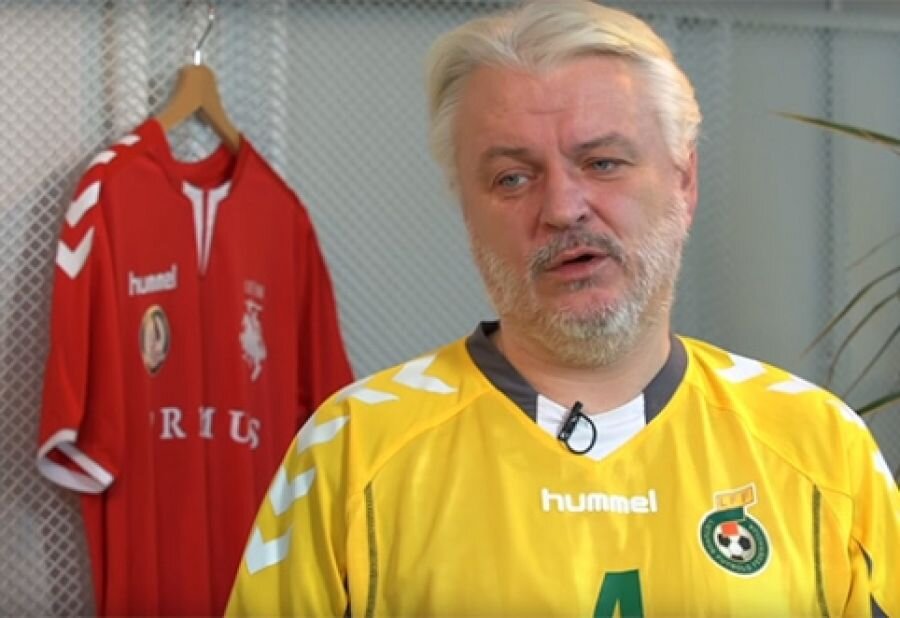
Lithuania’s national football team ended the year with a victory, but it did not inspire optimism in the country’s football landscape. Nerijus Kesminas and Ervinas Kvitkauskas criticized the national team, discussed Mindaugas Čepas’s future, and assessed the unexpected UEFA Nations League results.
The discussion also covered Mauricio Pochettino, who became the new manager of Manchester United, and the upcoming Baltic derby between Kauno Žalgiris and Riga FC in the Conference League.
A Lithuanian victory that offered no positivity
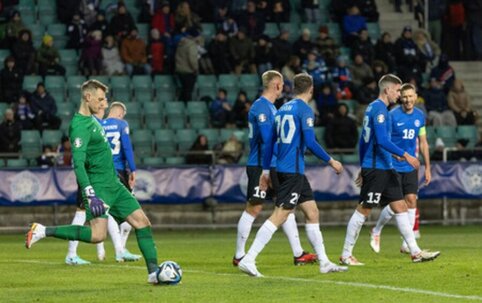
Lithuania began the November international window with a goalless draw against Suriname and ended it with a 2–1 victory over Liechtenstein. It was Čepas’s first victory as the new national team manager, but Lithuania finished second in its UEFA Nations League League D group with seven points. Azerbaijan took first place and promotion with eight points.
In the winning match against Liechtenstein, Lithuania led 2–0 after a goal by Eligijus Jankauskas and a penalty converted by Manfredas Ruzgis, but conceded in the 60th minute and could no longer feel confident until the end of the match.
In Kesminas’s opinion, even a victory over one of Europe’s weakest national teams provides no basis for talking about positive changes.
"Nothing has changed. When we were thrashed, we were told: look at the clubs the opponents play for. So now I suggest looking at where the opponents play. They all play in the middle of nowhere, just in different places, in semi-amateur clubs,” Kesminas said. "And we struggle against them; realistically, the victory could have slipped away, and we could have drawn 2–2.
I am not talking about any breakthrough; I would say there is complete stagnation. I don’t know what should be done, but everything has become so stagnant that we are going downhill. A year or a year and a half ago, we played better.”
Kvitkauskas agreed, saying that what caused the greatest concern was not the goal conceded itself, but the change in Lithuania’s play afterward.
"Speaking about the overall picture, I agree with many things,” Ervinas continued. "I also think that at home we should deal with and beat a team like that much more easily. In general, everything looked fairly good until the 60th minute. It seemed that we were controlling the match, perhaps would soon score a third goal and comfortably close things out. There was even a feeling that perhaps we would finally take some positivity from the match.
But then we conceded that unpleasant goal, which involved defensive errors, and perhaps the goalkeeper could have dealt with it more successfully. What happened after that goal was very bad. Liechtenstein recovered, began controlling the ball, our confidence disappeared, and chaos ensued. There were signs of panic and disorder—there was plenty of everything.”
Kesminas would entrust the national team to a foreign coach
With Lithuania’s national team season over, the question of the head coach’s future remains open. Čepas took charge of the national team as an interim manager in November, winning one of his first two matches and drawing the other.
Kesminas is convinced that the national team needs more than another coaching change from within the country’s football system. In his view, foreign specialists should be considered in the search for a long-term breakthrough.
"I have said before that, in my view, if we want a breakthrough, we need someone from outside the country,” Nerijus said confidently. "Otherwise, we will once again hear the same things: we gave everything, we had chances. I usually don’t see them, but the coaches explain that they were there. There is more positivity than negativity, and everything will remain as it was. As I see it, if we want a breakthrough, we need a foreigner.
Of course, that is also a risk, but now we have to take a risk. If we want to keep wallowing in the same mess... I have lived with this for 40 years, and I would certainly wait another four to eight years if results came. But I do not see any internal reserves or resources.”
In the Nations League—crushing results and England’s revenge
The program also focused on the UEFA Nations League League A matches, which produced a number of unexpected results.
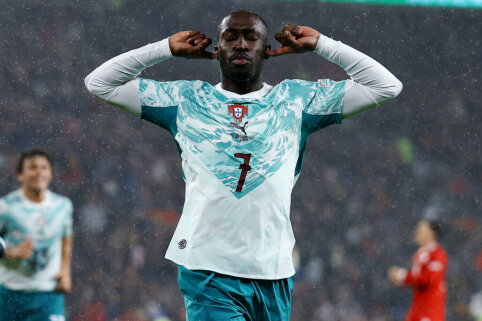
Portugal, which had said farewell to Cristiano Ronaldo, lost 4–1 at home to Denmark but defeated Wales 3–2 in its final match to preserve first place in the group with 15 points. Denmark’s impressive victory was not enough to secure a place in the quarter-finals: after a 3–2 defeat to Norway, the Danes finished third with nine points.
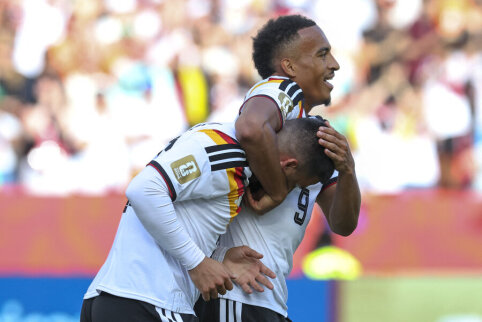
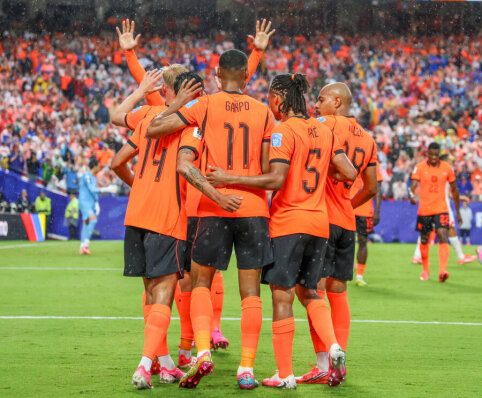
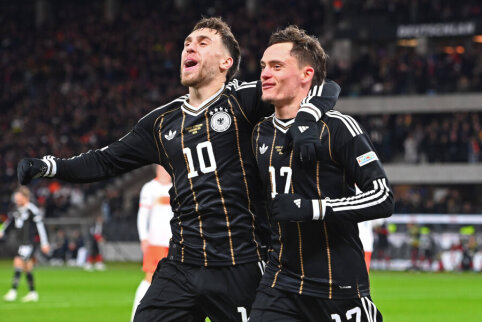
Another surprising result was recorded in Berlin, where Germany crushed the Netherlands 5–0. Both national teams finished the group stage with 11 points, but Germany took first place. The Dutch also advanced to the quarter-finals.
Kesminas attributed these results to the teams’ differing levels of motivation in their final group-stage matches. According to him, some of the favorites did not always show the same determination as opponents who desperately needed a victory.
Nevertheless, the most attention was probably focused on England, which defeated world champions Spain 3–2 in Madrid. England led 3–0, but after Elliot Anderson was shown a red card in the 63rd minute, Spain came back into the match and reduced the deficit to one goal.
Both national teams collected 15 points, but England secured first place in the group thanks to a superior goal difference. It was also revenge for the identical defeat England suffered against Spain in September.
"Speaking about this match, we can probably once again say that England wanted that revenge more. For the first 60 minutes, until the red card, it was completely one-sided,” Kesminas said. "If not for that incident, I think England would have comfortably seen the match out. But these are still the Spanish. They did not fail to play during the first 60 minutes merely because of a lack of effort; they simply were not allowed to play.
There is no question that England are a huge force in international football. They are third in the FIFA rankings and finished third at the World Cup. I would say that, despite all the honors, we should move Argentina lower, and in my view we now have a very clear top three: Spain, England, and France.”
Italy ended the Nations League group stage unsuccessfully. After a 3–1 victory over France on November 12, a draw in Belgium would have been enough for Italy, but they lost there 4–1. In the final group table, Italy finished third with 10 points, behind France (13) and Belgium (12), and therefore failed to reach the quarter-finals.
Will Pochettino become Man United’s savior?
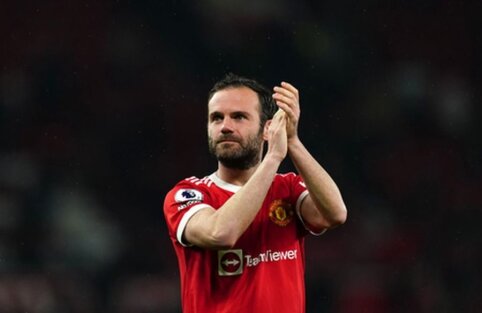
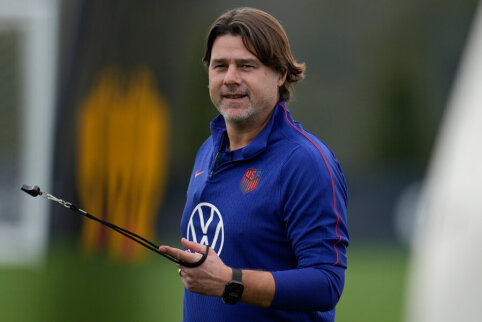
Changes at Manchester United became a major topic during the international window. After Michael Carrick’s dismissal, Mauricio Pochettino is taking over the team, having previously coached the United States national team.
The Argentine arrives in Manchester at an extremely difficult time. After ten English Premier League matches, United have just eight points and sit 18th, in the relegation zone. The new manager has signed a two-and-a-half-year contract.
Although Pochettino previously enjoyed a highly successful spell with London club Tottenham, Kvitkauskas doubts whether the Argentine will be the person who returns Manchester United to the elite of English football.
"Everyone talks about him so emphatically, but I really don’t know whether Pochettino is a savior. Yes, I certainly remember that his spell at Tottenham was successful, but it lasted five years,” Ervinas stressed. "It is unlikely that anyone can last five years at Man United now.
But clearly, as a coach, this is a good opportunity to arrive—you understand that even without a coach, the team should eventually pull itself together and start winning this season. I am not talking about reaching any great heights, but about 12th or 13th place, when they are currently only 18th. You lift the team to 12th or 13th place and everything looks fine, the season is considered a success, then you make a few moves in the summer and start another season.
Many people see Pochettino as a huge name, but I have not seen anything particularly special from him. He did not show much at Chelsea, spent one season at PSG, and I would not say that he achieved anything impressive with the United States national team either. I am not a great believer in him.”
The discussion also touched on the role of one of United’s most important footballers, Bruno Fernandes. Kvitkauskas asked his colleague whether he could be the leader of a winning and successful team.
Kesminas was categorical.
"To me, he is just another Portuguese princess,” Nerijus said sharply. "I have serious doubts about his winner’s mentality and his qualities as a fighter. He is a good, very technical player, but something is missing. He is not a leader; he simply lacks leadership qualities. He is not the person around whom you should build a team if you have major ambitions.”
A Baltic derby in Kaunas
The program concluded with a discussion of the upcoming UEFA Conference League clash between Kauno Žalgiris and Riga FC. On November 26 at 7:45 p.m., the teams will meet at Kaunas’s Darius and Girėnas Stadium.
For the Lithuanian champions, the match will be an opportunity to earn their first points in the competition. In their first three matches, Kauno Žalgiris lost 4–0 to Brighton, 4–1 to Brann of Bergen, and 3–0 to Lugano. With no points and a 1–11 goal difference, Kauno Žalgiris currently sit last.
Riga, meanwhile, have not yet suffered a defeat in three matches. The Latvian club drew with Kairat of Almaty (Kazakhstan), Pafos (Cyprus), and Jablonec (Czech Republic). With three points, Riga sit 19th.
However, the Latvian club will arrive in Kaunas after a controversial end to its domestic season. Riga refused to play its final match of the season against RFS, protesting what the club described as incorrect refereeing decisions.
The Latvian Football Federation awarded a technical 3–0 defeat, imposed a €6,822 fine, and decided to deduct three points from the club in the 2027 Latvian championship.
"The Riga club have been performing quite well so far—they have drawn with clubs from Kazakhstan, Cyprus, and the Czech Republic. Of course, they also ended the domestic championship in spectacular fashion by refusing to play RFS, another Riga team, because they claimed that RFS received preferential treatment from the referees and so on.
One has to understand that this club is not Latvian in the same way RFS are, where virtually all the capital comes from Latvia. This club is the toy of a Russian oligarch based in Dubai. That has to be taken into account, but it certainly will not be easy,” Kvitkauskas concluded.
Incidentally, Ervinas revealed that, before returning after the international break, Kauno Žalgiris head coach Željko Sopić sent two players—Leo Ribeiro and Fabien Ourega—home. According to Kvitkauskas, the coach told the pair that they were no longer needed for the remaining European matches.
"It is an interesting situation: the Lithuanian championship has been won, but the season is not quite over yet. Strange, isn’t it?” Ervinas asked his colleague.
"You know what they say—we reached the UEFA tournament group stage and are promoting Lithuania’s name. Better not to promote it; there is no need for that,” Kesminas retorted.

No comments yet...
No comments yet...
No comments yet...
Leave a comment
Cituoti komentarą
Report an inappropriate comment